AI in Software Development: Part 2
04.05.2026
David
David
AI in Software Development: Part 2
Advances in AI-Assisted Development Software
It’s not only the performance of Large Language Models (LLMs) that has improved dramatically in recent months; the development of AI tools for software development has also made significant strides. Here is a chronological overview of some of the most notable developments:
AI-Based Tab Completion:
Tab completion is a feature that offers developers matching suggestions as they type, which can be accepted with the Tab key - traditionally limited to variable and function names from the current project.
With GitHub Copilot, an extension for Microsoft’s Visual Studio Code development environment, the first major wave of AI-assisted development arrived. It allows developers to automatically generate code snippets and entire functions based on the context of the code they are working on. At that time, however, the models were not yet powerful enough to live up to these promises. It remained a somewhat smarter tab completion.
AI Models with Context Understanding:
Models specialized in coding allowed for discussing attached context, such as files from a code base. This made it possible for the AI not only to generate code, but also to understand and explain what was happening in existing code. This was a major step toward establishing AI as a true partner in software development. Unfortunately, the models here were still not powerful enough to be truly useful. Only small questions were sensibly possible, and the answers were often factually incorrect.
Access to the Web:
These AI models were quickly equipped with the ability to load content from the web in order to access up-to-date information. Useful, but in the context so far, just another search engine. While this allowed knowledge gaps since the cutoff of the training data to be closed, the AI was still not able to gather and understand context on its own.
Agents
Agents are AI systems that are capable of performing tasks independently by using various tools and resources. These allow the model to navigate a code base on its own, read files, and write and test code. If we want to speak of a second generational leap in this blog series, this is the moment.
Agents with Tool and Plugin Support
The next stage of agents allows the configuration of tools, skills, and plugins to extend the capabilities of the AI. Anthropic is once again a pioneer here: the company developed the Model Context Protocol (MCP), which makes it possible to connect AI models with external tools and resources.
Agents That Control Agents
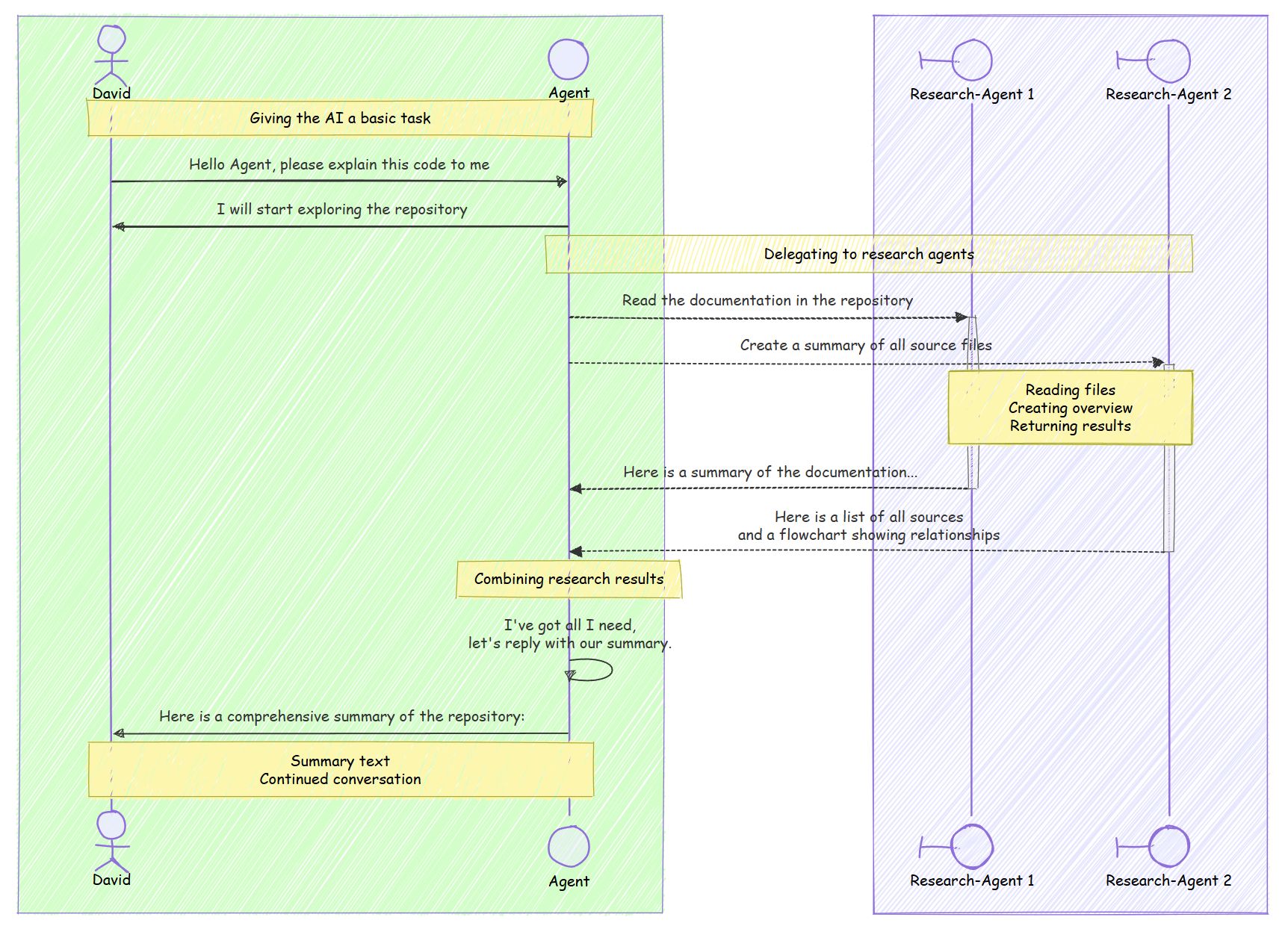
The final ingredient in this recipe is the ability of agents to control other agents. This means that an agent is not only capable of performing tasks, but also of coordinating and delegating to other agents.
This menu of capabilities opens up entirely new possibilities for automating complex workflows, for collaboration between different AI systems, and brings the potential to turn software development on its head.
In the next part of this blog series, I will go into more detail about the impact of these advances on software development at Collax, and how we are using these new possibilities to improve our development processes.